 BinMate
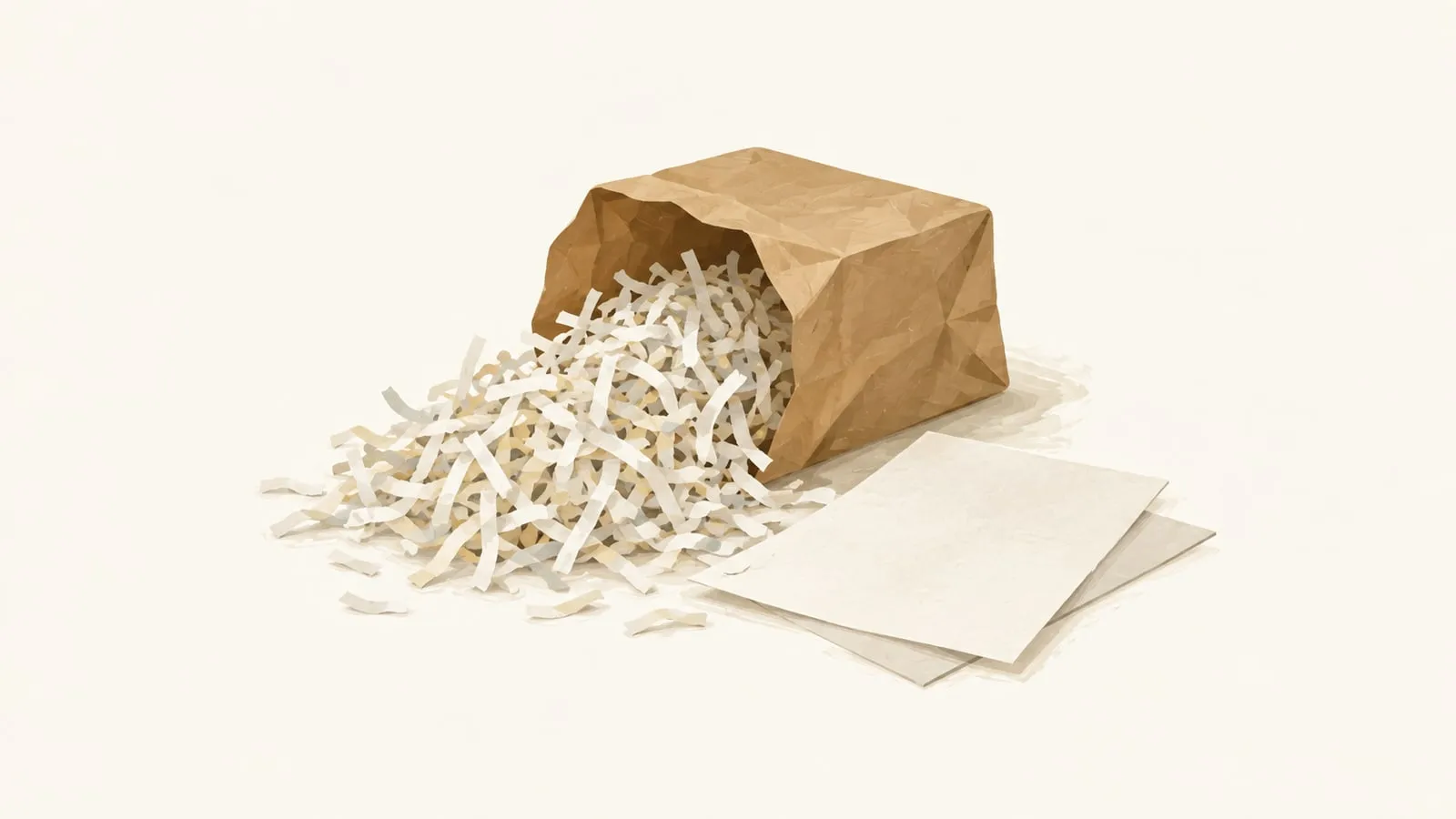
Shredded paper is accepted by some recycling services and excluded by others. Check for “shredded paper” in your council’s instructions before putting it in a paper or mixed-recycling bin. Ordinary paper being accepted does not settle the question.
Why is shredded paper treated differently?
Shredding changes paper into small pieces that may not suit the receiving collection and processing system. London Recycles explains that not all councils collect it and that paper-mill processing limitations are part of the reason.
A paper bag can help contain loose strips where a council permits one, but it does not make an excluded material acceptable. The collection must accept both the shredded paper and the way you package it.
Find the rule for your address
Search the council’s waste A–Z for “shredded paper”. If the entry is missing, ask its recycling team these questions:
- Do you collect household shredded paper for recycling?
- Does it need a paper bag, envelope or another specified container?
- Which bin or collection point should I use?
- Are there limits on the amount or the types of paper?
As one clear local example, Lincolnshire County Council directs shredded paper to general waste and identifies an option for excess material at a household waste recycling centre. Do not assume a neighbouring authority uses the same rule.
If your council accepts it for recycling
Follow the requested container and preparation exactly. Do not substitute a tied plastic bag for a paper bag without checking: a service may reject bagged recycling or particular bag materials.
Keep the material dry and avoid scattering strips around the collection point. If you have a large clear-out, check the volume limit or an alternative service before filling the bin. Keeping the lid shut also reduces the chance of paper escaping.
Our recycling-bin rules cover the other presentation checks to make before collection.
If your council does not accept it
Use the council’s stated residual-waste route or a specialist paper service that confirms it accepts your material. Do not leave shredded paper at a paper bank just because whole sheets are accepted there.
Some plain, uncoated paper may be suitable for an established home-composting system. London Recycles excludes coloured or glossy paper from its composting suggestion. Do not treat shiny, laminated or unknown coated documents as compostable, and do not transfer this home-compost advice to a council garden-waste bin.
Food-caddy lining rules are also local. Use shredded paper there only if your food-waste service allows it. Our food-waste guide explains why accepted liners matter.
Reducing what needs shredding
Check which documents actually contain private information before shredding an entire stack. Unneeded plain sheets without sensitive details may be able to follow the ordinary paper route, subject to local rules. Keep any documents you still need.
For confidential records, choose a disposal method appropriate to the information. An ordinary recycling bin is not a promise of confidential destruction; a specialist service should explain its own handling arrangements.
Common questions
Can shredded paper go in a blue bin?
Only if the service accepts it in the required form. Bin colours vary between councils.
Can I put it in a plastic bag first?
Only if that exact presentation is permitted. Do not assume a bag solves the sorting problem.
Is shredded paper the same as paper confetti?
No. Confetti may include dyes, coatings, foil or plastic. Check the actual material and local disposal instructions separately.