 BinMate
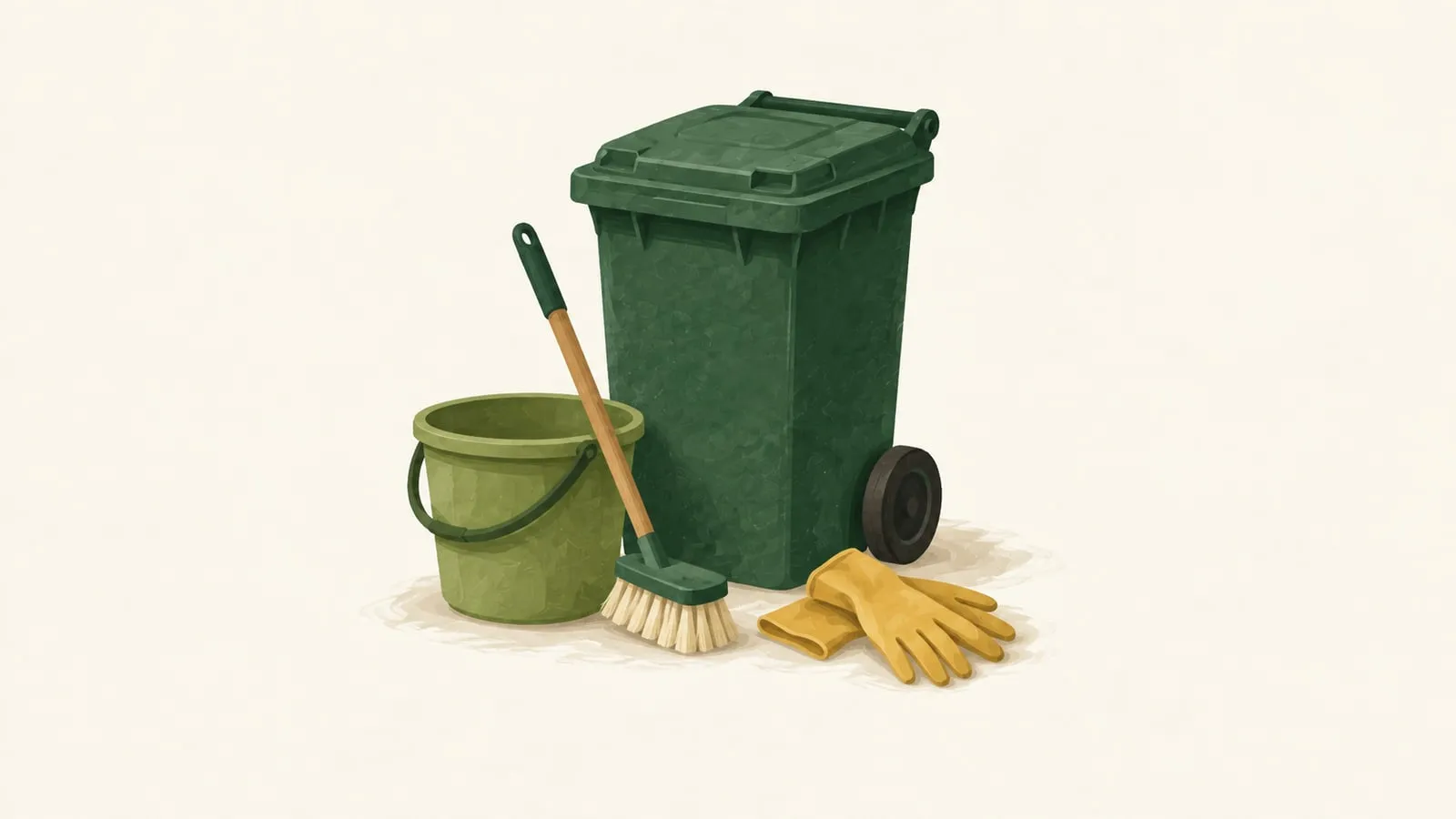
Clean your wheelie bin after it has been emptied, using a brush, water and a suitable detergent. Remove remaining scraps carefully, follow the cleaner’s label and plan where the dirty water will go before you start.
What you need
- Protective gloves and closed shoes.
- A long-handled brush reserved for dirty cleaning jobs.
- A bucket and enough water for the job.
- A suitable detergent used according to its label.
- A stable place to work, away from children, pets and passing pedestrians.
You do not need to fill the bin with water or climb into it. If it is too heavy or awkward to handle, a professional cleaning service may be more practical. Ask how the operator captures and disposes of its wash water.
Clean the bin step by step
1. Start with an empty container
Check for scraps left after collection. Remove accessible waste safely and place it in the correct disposal route. Do not reach blindly into the bottom or handle needles, unknown chemicals or broken glass. Stop and ask the council for advice if the remaining contents cannot be handled safely.
2. Clean the lid and rim
Apply the cleaning solution as its label directs. Use the brush on accessible surfaces, including the lid’s underside and the rim where residue can collect. Avoid splashing your face or surrounding property.
3. Brush the inside
Work on visible residue with the long-handled brush. Keep the container stable and avoid leaning so far in that you could lose your balance. Follow any care instructions supplied with the bin.
4. Rinse without spreading the waste
Use only the water needed to remove residue and the cleaning product. Collect dirty wash water rather than letting it run into the street or a surface-water drain. If you do not know the suitable disposal route at your property, ask your water company or use a service that manages the wastewater.
When hiring a bin-cleaning business, ask how it handles wastewater. The government’s pollution-prevention guidance sets out requirements for commercial washing activities, including wheelie-bin cleaning.
5. Dry and put it away
Allow the container to drain and dry in a secure position where it cannot tip over or obstruct access. Close it once dry. Clean your equipment, remove gloves and wash your hands.
Do I need bleach or boiling water?
Start with physical cleaning and an appropriate detergent. If you use a disinfectant, check that its label covers the surface and follow its dilution, contact-time and rinsing instructions. Do not mix it with other cleaning products.
Avoid handling a full wheelie bin of hot water. It is heavy and difficult to control. A stronger mixture or hotter wash is not automatically a better cleaning method.
Keeping it cleaner between collections
Havant Borough Council’s bin-care advice emphasises covering food, keeping lids closed and storing bins in shade where possible. Deal with spills early and follow your local food-waste arrangements so scraps do not sit loose in the wrong container.
There is no single cleaning interval that fits every household. Inspect the bin after collection and clean it when residue, spills or odour make it necessary. If flies or larvae are already present, see maggots in the bin.
Common questions
Can I clean a full bin?
Wait until it is emptied if possible. Pouring cleaner over rubbish leaves the waste and residue in place and can create leaks.
Can I use a pressure washer?
Only if you can control the equipment, splashes and wastewater safely and the bin’s care instructions allow it. A brush is a simpler starting point.
What if it is a shared bin?
Ask the landlord or building manager who is responsible for cleaning and repairs. Do not tip or move a large communal container yourself.